In the Know by Dr. Christian Klaue.— I (really) enjoy reading and I like sharing good resources with others. To start off this year, I am revisiting the books I recommended last year and offering my favourite read for that category this past year. I will also offer a short summary of the book to refresh everyone’s memory.
-
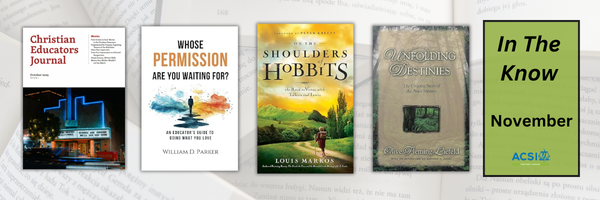
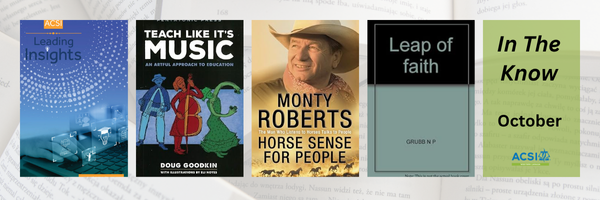
October: Leading Insights: Artificial Intelligence What is this resource about? This book deals with how Christian schools should respond to and utilize generative artificial intelligence.
November: Nuts & Bolts of Inclusive Education What is this resource about? Rather than being a book that describes the philosophy behind inclusive education, this is a book that provides forms for everything from an intake process, to creating IEPs, to communicating with staff, students, and parents, writing report cards, and working with paraeducators.
December: AI with Intention What is this resource about? Frontier provides a number of strategies on how to incorporate AI into the classroom in a way that maintains academic integrity and supports actual learning.
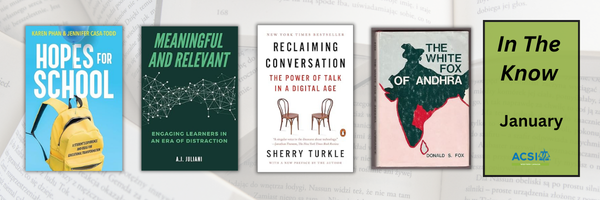
January: Hopes for School What is this resource about? A student, Karen Phan, was connected to a teacher, Jennifer Casa-Todd, who commented on Phans’ recommendations for improving school.
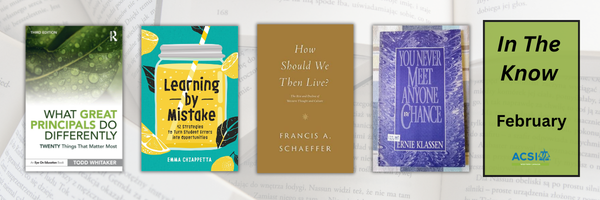
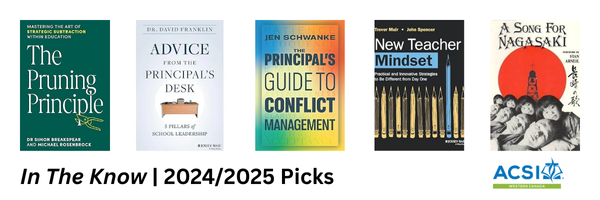
February: What Great Principals Do Differently What is this resource about? Whitaker provides 20 specific strategies that help principals be effective in their roles.
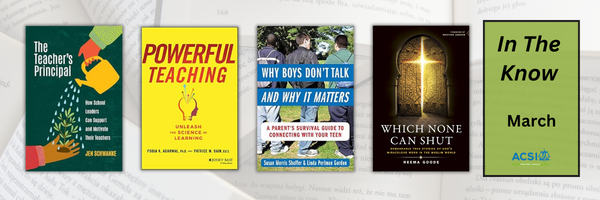
March: The Teacher’s Principal What is this resource about? Schwanke has written a variety of books to help principals become more effective.
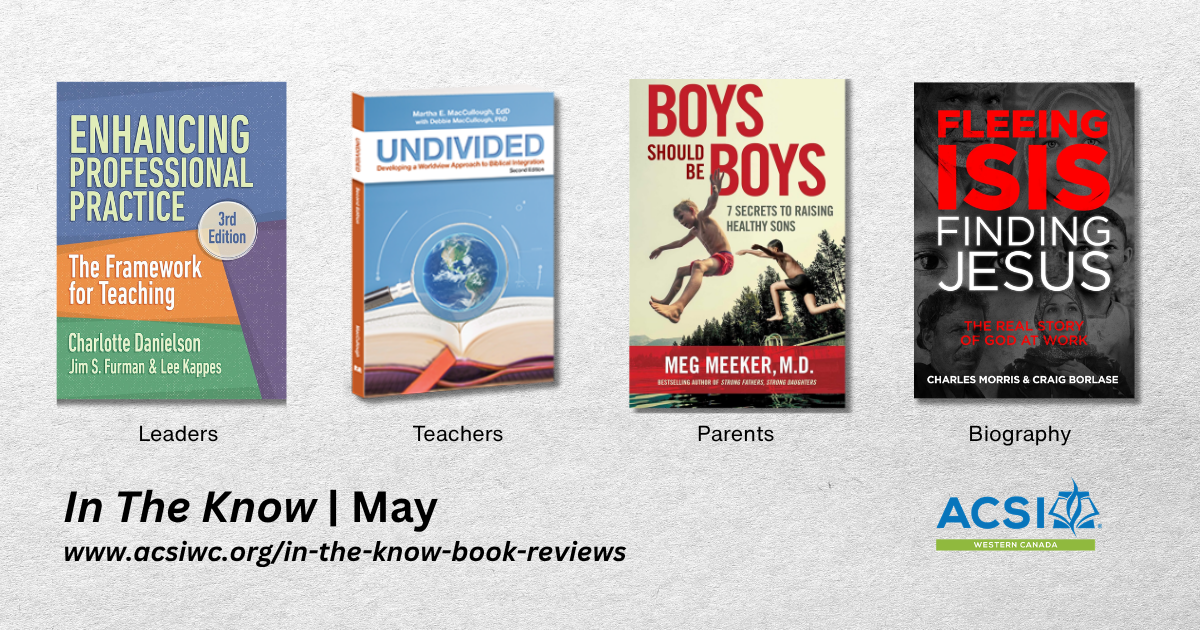
April: Enhancing Professional Practice: The Framework for Teaching What is this resource about? This is the third edition of Danielson’s framework for teaching.
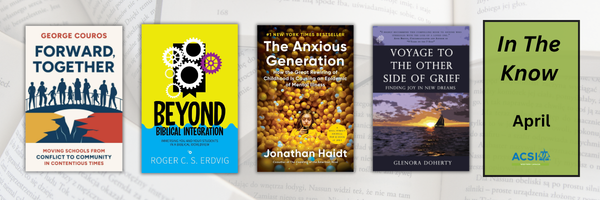
May: Forward Together What is this resource about? Couros wrote this book to encourage school administrators to work together so that, together, they could help the school fulfill its vision and mission.
My top pick for this category for the 2025-2026 school year is: Forward Together by George Couros as it balances the required skills for principals with stories of how principals learned those principles and exemplified them.
-
October: Teach Like It’s Music What is this resource about? Goodkin is a music teacher using the Orff methodology and wrote this book of suggested teaching strategies culled from teaching music for use by regular classroom teachers.
November: Whose Permission Are You Waiting for? What is this resource about? Parker provides a variety of principles for teachers (and leaders) to follow if they are looking at a change in role within their career.
December: Just Tell Them What is this resource about? Groshell explains how to incorporate direct (explicit) instruction within a UDL framework so that students develop a strong foundation for learning.
January: Meaningful and Relevant What is this resource about? Juliani addresses student engagement and how that can be improved.
February: Learning By Mistake What is this resource about? Chiappetta is a math teacher and has provided twelve specific strategies on how to help students turn their mistakes into learning opportunities.
March: Powerful Teaching What is this resource about? Agarwal and Bain describe some of the top learning strategies teachers should use.
April: Undivided What is this resource about? This is a revised version of a textbook MacCullough wrote to help teachers develop a biblical worldview for all school subjects.
May: Beyond Biblical Integration What is this resource about? Erdvig describes the current pattern of biblical worldview integration found in many Christian schools and explains how to develop your own worldview so that you can effectively teach others what your worldview is.
My top pick for this category for the 2025-2026 school year is: pick a month. As I reviewed this selection, I found it impossible to choose one (or even three or four) of these titles. They focus on different aspects of teaching, but all are excellent in their way.
-
October: Horse Sense for People What is this resource about? Roberts is one of the foremost horse trainers in the world and describes the principle as used within the horse training community, an explanation of the principle, what the principle looks like as applied to humans, and then some case studies of where this worked.
November: On the Shoulders of Hobbits: The Road to Virtue with Tolkien and Lewis What is this resource about? Markos revisits the classical virtues of courage, temperance, wisdom, and justice, and adds what he calls the theological virtues of friendship, faith, hope, and love as he walks the reader through the works of Tolkien and Lewis, drawing heavily on The Lord of the Rings and The Chronicles of Narnia.
December: The Surprising Power of Joy What is this resource about? How do we climb over our circumstances and rediscover the joy of the Lord (which, remember, is our strength - Neh. 8:10).
January: Reclaiming Conversation What is this resource about? Turkle describes the impact that digital devices have on the ability to carry a conversation.
February: How Should We Then Live? What is this resource about? Francis Schaeffer, one of the first Christians to really talk about what a biblical worldview is and how to develop a biblical worldview, provides a brief history of western thought and culture and shows how our culture today is degrading the more we move away from following God’s Word.
March: Why Boys Don’t Talk and Why It Matters What is this resource about? As boys grow into teenagers, they often stop talking as much to their parents as they used to.
April: Boys Should Be Boys What is this resource about? Meeker, a medical doctor, describes not only how boys and girls are different, but how to parent boys and honour how God made them.
May: The Anxious Generation What is this resource about? Haidt describes the rise of anxiety within society, posits some reasons for why this might be happening and then seeks to provide some solutions to this problem.
My top picks for this category for the 2025-2026 school year are: Reclaiming Conversation by Sherry Turkle and On the Should of Hobbits: The Road to Virtue with Tolkien and Lewis by Louis Markos. Turkle's book deals with a current issue (digital technology) whereas Markos’ book deals with the virtues we should aspire to.
-
October: Leap of Faith Who is this resource about? This book is a description of the early years of the Christian Literature Crusade.
November: Unfolding Destinies Who is this resource about? This is the story of Pete Fleming (who was martyred in Ecuador in 1956 along with Nate Saint, Jim Elliott, Roger Youdarian, and Ed McCully) as told by his wife, Olive Ainslie.
December: The Story of My Life Who is this resource about? This is the autobiography of Oswald J. Smith, the founder of The People’s Church in Toronto.
January: The White Fox of Andhra Who is this resource about? This is the biography of Silas Fox who ended up as a missionary to India.
February: You Never Meet Anyone By Chance Who is this resource about? This is a collection of evangelistic conversations Ernie Klassen had with a variety of people as he travelled through Germany and Canada.
March: Which None Can Shut Who is this resource about? This is a series of stories about Reema Goode, who is a missionary to a Muslim country.
April: Fleeing ISIS, Finding Jesus Who is this resource about? This is a collection of stories told to the editor about individuals who were attacked or persecuted by ISIS and how they found safety in Jesus.
May: Voyage to the Other Side of Grief Who is this resource about? The author of this biography lost her 62-year old husband to a heart attack and so she documents how she went through the seven stages of grief both emotionally and spiritually.
My top pick for this category for the 2025-2026 school year is: Unfolding Destinies by Olive Ainslie. While most of these are great stories, Ainslie’s book is a cut above as she describes the life of one of the Christian heroes I look up to.